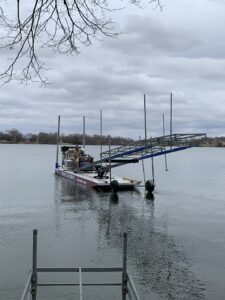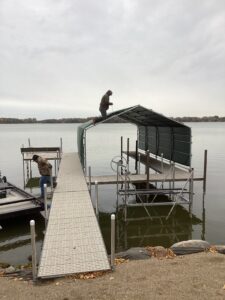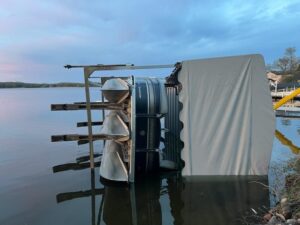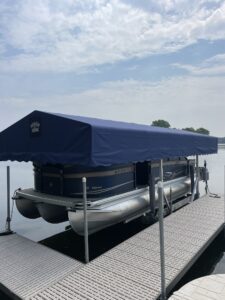
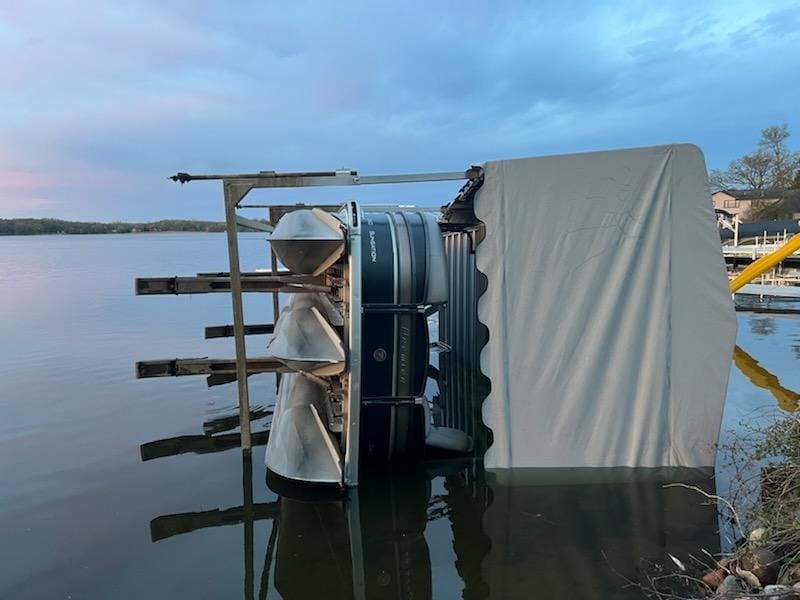
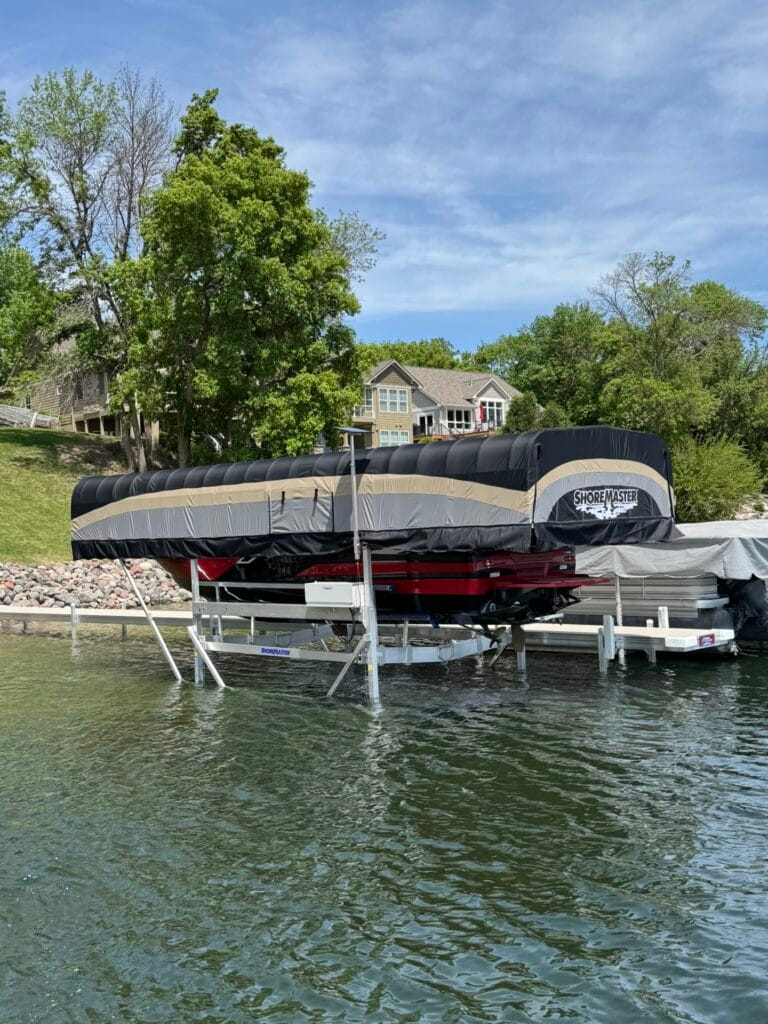
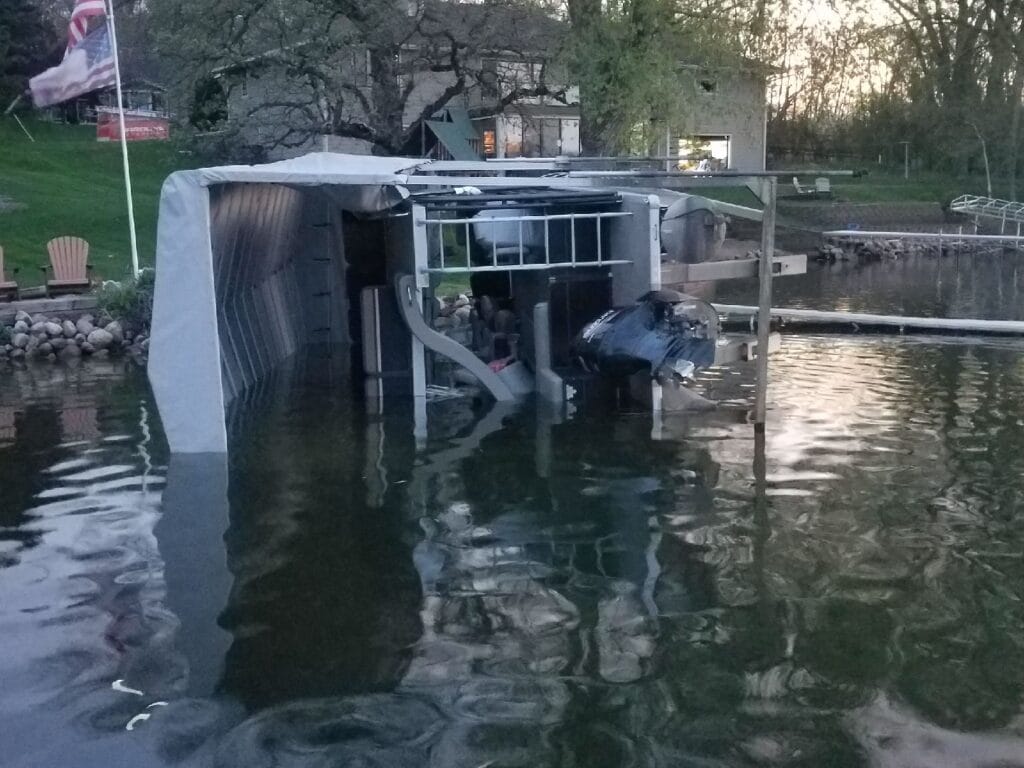
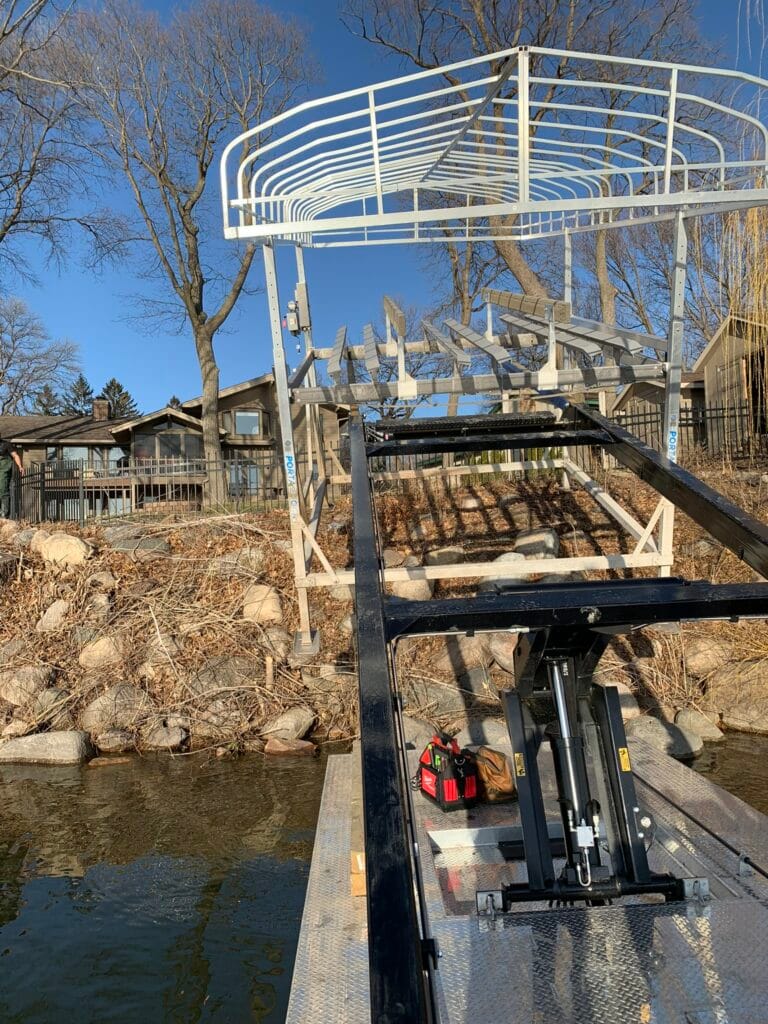
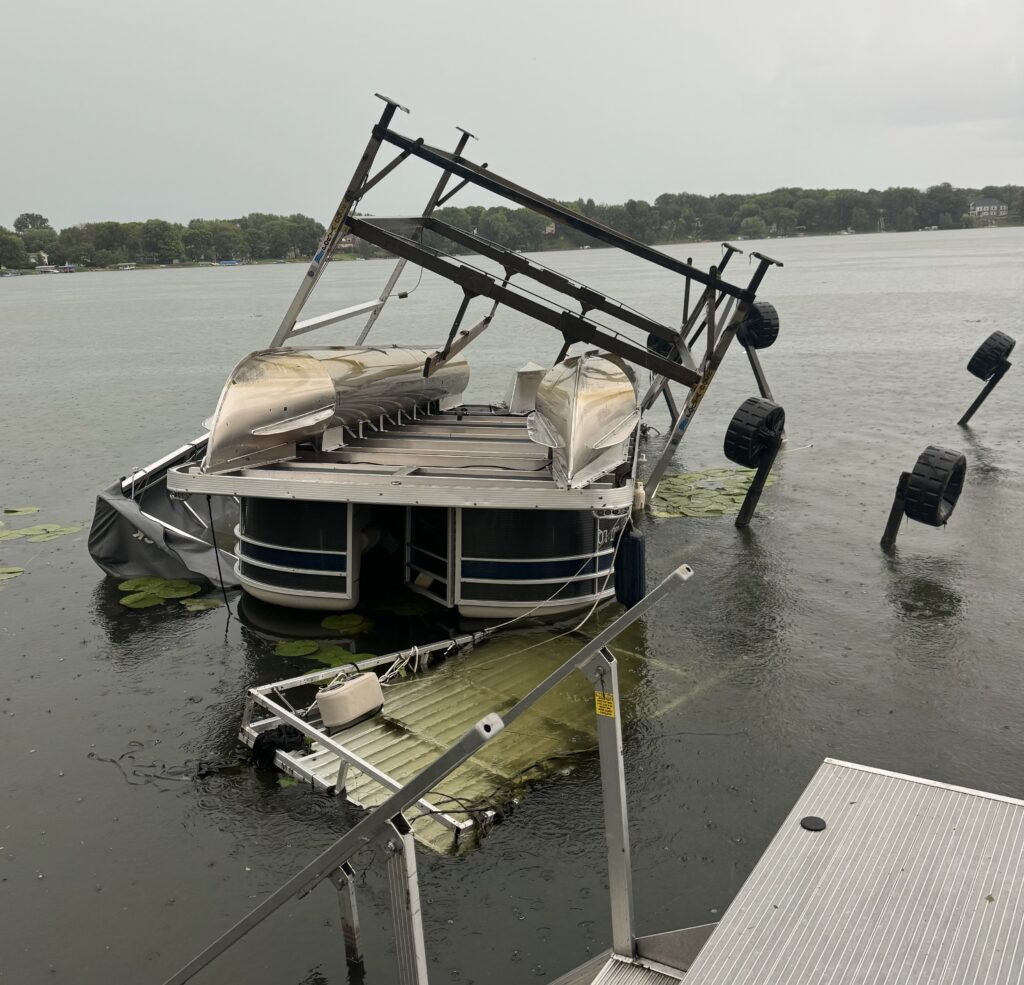
A dock rarely fails all at once. It leans first.
Most stability problems announce themselves in small ways:
- The dock has a low corner that was not there last summer.
- The boat sits crooked on the lift.
- The lift wheel takes more muscle than it used to.
- Something moves under your feet that used to feel solid.
None of those mean the equipment is done for. They mean something underneath or inside the setup has changed. This guide covers the usual reasons why, and when a lean is worth getting looked at.
Why level matters more than it looks
An unlevel dock is not just a looks problem. It is a load problem.
- Docks and lifts are built to carry weight evenly. A lean shifts that weight onto parts that were never meant to carry it alone.
- A lift raising a boat at an angle strains cables, pulleys, and the frame on every single cycle.
- The lean itself tends to grow. A low corner sinks a little more each season because the load keeps pushing where the support already gave.
A dock that is almost level is still wrong, and it usually gets more wrong the longer it waits.
Start with the lake bottom
The most common cause of a leaning dock is what it stands on.
- Soft muck compresses under load. A leg that looked set in May can settle by July, and it rarely settles evenly.
- Bottoms are not uniform. One footing can sit on firm sand while another sits on soft material a few feet away, which is exactly how a lean starts.
- Settling is gradual, so most owners do not notice until the boat sits crooked or the deck visibly tips.
A soft bottom is workable. It just needs the right support underneath.
- A stable base under the feet matters as much as the equipment on top. See our Lake Mat products for one way that gets handled on soft bottoms.
Next, water and weather
The lake does not hold still, and your equipment feels every bit of it.
- Water levels change through the season. A setup adjusted for spring depth can end up standing wrong for August water.
- Wind and wave action work on a dock all season long. Exposed shorelines take more of that than protected bays, and the constant motion loosens what was tight.
- Minnesota winters add their own pressure. Ice and freeze-thaw movement can shift footings and equipment left in or near the water.
None of this is a defect. It is the environment doing what it does. The question is whether the setup was built and adjusted to handle it.
Then, the setup itself
Some leveling problems were installed on day one.
- An eyeballed install can be off from the start, and off compounds. Small errors in footing placement show up as big errors at the far end of the dock.
- Careless handling leaves marks that matter later. Bent legs, tweaked frames, and stressed connections from rough moves do not always fail right away. They fail slowly, as a lean.
- Uneven loading plays a part too. A heavy accessory or a boat consistently tied to one side puts repeat stress on the same section.
This is why the install matters as much as the equipment. Measured and leveled setups have fewer of these problems, because the problems were never built in.
Lastly, time and wear
Even a well-set dock is a machine sitting in water. Parts age.
- Hardware works loose season over season.
- Lift cables, pulleys, and moving parts wear, and wear shows up as a lift that cranks harder, sounds different, or holds the boat at an angle.
- Wood decking, welds, and connection points all have a service life, and the lake shortens it.
Age does not automatically mean replacement. It means the setup deserves a real look instead of another season of hoping.
When a lean is worth an assessment
You do not need to diagnose it yourself. You just need to notice it.
Worth getting looked at:
- A lean or low corner that is new, or one that got worse since last season.
- A boat that sits crooked on the lift, or a lift that takes noticeably more effort to raise.
- Movement, wobble, or shifting underfoot that was not there before.
- A dock or lift that was knocked around during a rough move or a hard season.
One boundary worth knowing: if a storm moved, tipped, or damaged your equipment, that is its own situation with its own next steps. Start with our guide on what to do after storm damage to a dock or boat lift instead.
Mistakes that make a lean worse
Waiting for fall.
- A lean carries load wrong all season. The parts absorbing that extra stress do not wait politely for removal day.
Cranking harder on a lift that is fighting you.
- Extra muscle on a strained lift pushes the wear further along. If it got harder to raise, something changed, and force is not the answer.
Propping and shimming by feel.
- A quick fix that ignores the actual cause usually moves the problem to another leg. The lean comes back, sometimes somewhere new.
Assuming it is fine because it is still standing.
- Still standing and stable are different things. The gap between them is where the expensive damage happens.
Leveling problems on Southern Minnesota lakes
Around Prior Lake, Spring Lake, Cedar Lake, and the South Metro, bottom conditions and water behavior change property to property, sometimes within the same bay. A neighbor with firm sand can have a rock-solid setup while three doors down the same dock model settles every July. That is why the cause matters more than the symptom, and why the same lean can need two different fixes on two different shorelines.
When to bring in BigWave
If your dock or lift is leaning, wobbling, or fighting you, an assessment beats another season of guessing.
BigWave looks at what the equipment is standing on, how it was set, what has worn, and what the water has done to it, then recommends the fix that matches the actual cause. The work gets measured and leveled, not nudged until it looks close.
You can explore dock & boat lift repair & leveling to see how the process works.
FAQs
Is a slightly unlevel dock really a problem?
It can be, because leans tend to grow. The low side keeps taking extra load, the support under it keeps giving, and hardware wears unevenly along the way. A small lean caught early is usually a smaller fix than the same lean two seasons later.
My lake bottom is soft. Is my dock always going to settle?
Not necessarily. Soft bottoms are common on Southern Minnesota lakes and they are workable with the right support under the footings. If your setup settles every season, that is a sign the support underneath does not match the bottom, and that is fixable.
Why is my boat lift getting harder to crank?
It could be several things, from worn components to a lift that is no longer sitting level under the load. Guessing from shore is not worth much here. What matters is that harder to crank means something changed, and it is worth a look before it becomes a failure.
A storm knocked my dock crooked. Is that the same problem?
No. Storm damage is its own path, with different first steps than a gradual lean. Start with the storm damage guide linked above, or head straight to our dock & boat lift storm recovery page.
Related resources
For the bigger picture on repair decisions, head back to the Dock & Boat Lift Repair & Recovery Guide. If you are weighing whether the fix is worth it, read when to repair vs. replace a dock or boat lift.
Ready to get the lean looked at? Explore dock & boat lift repair & leveling and request an assessment.