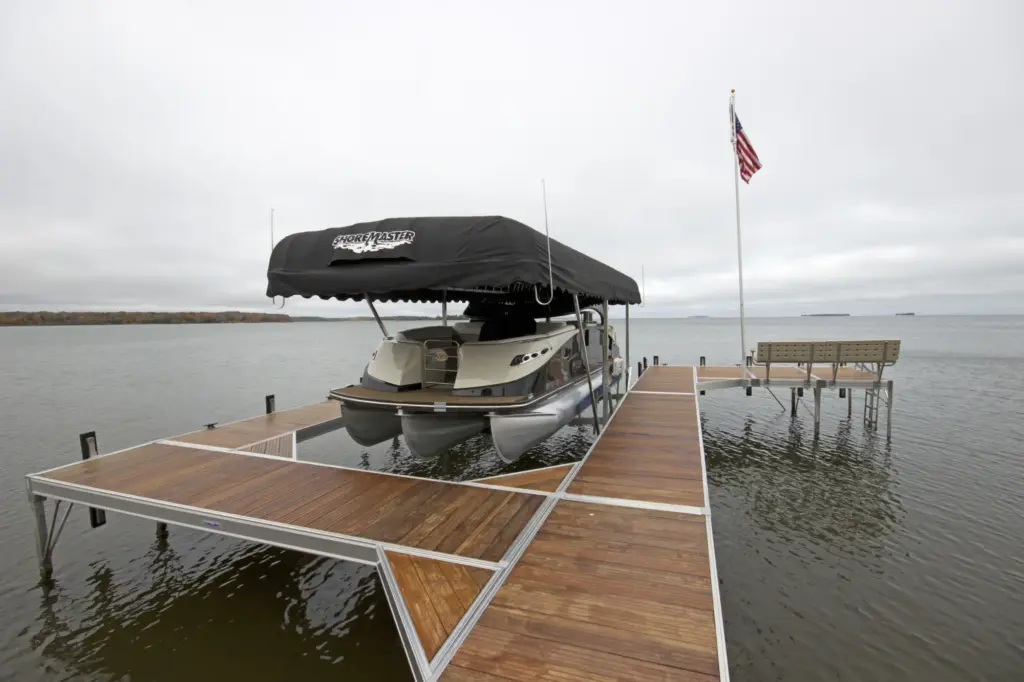
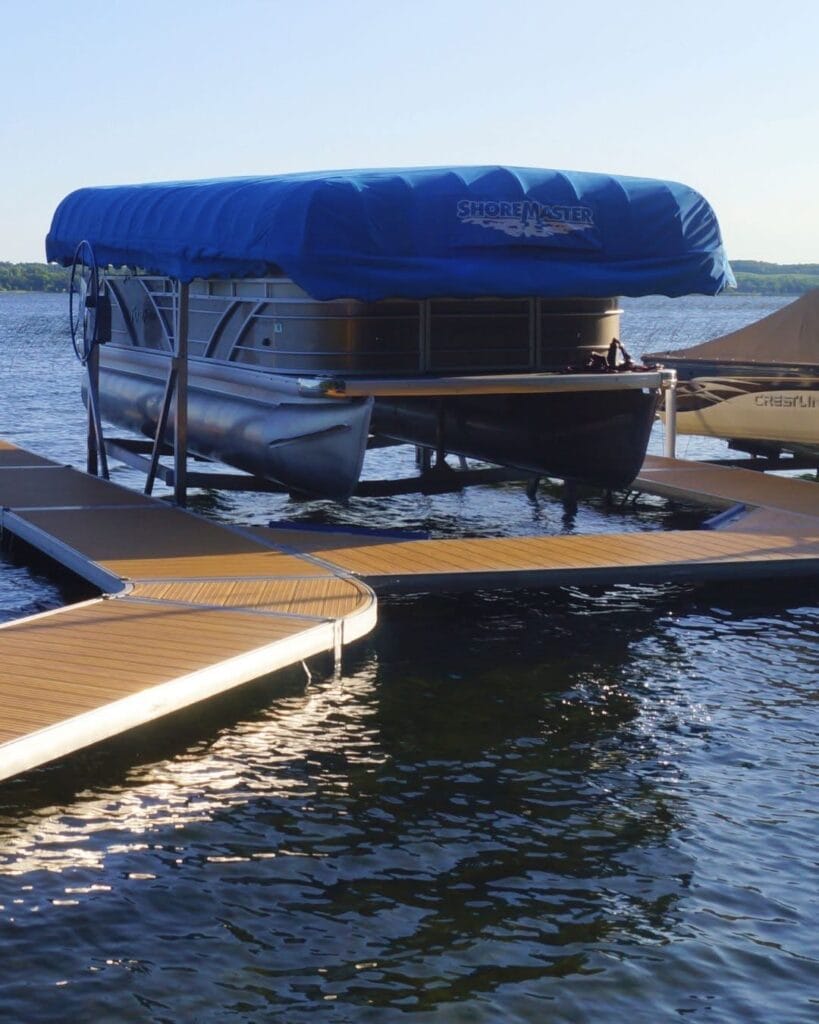
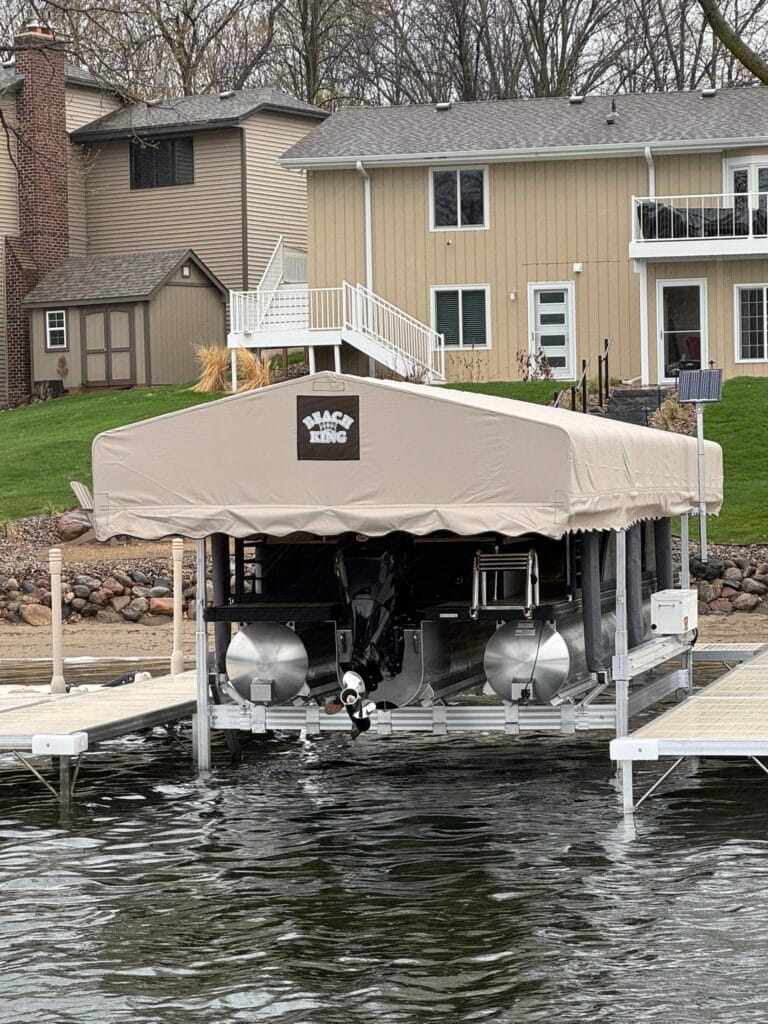
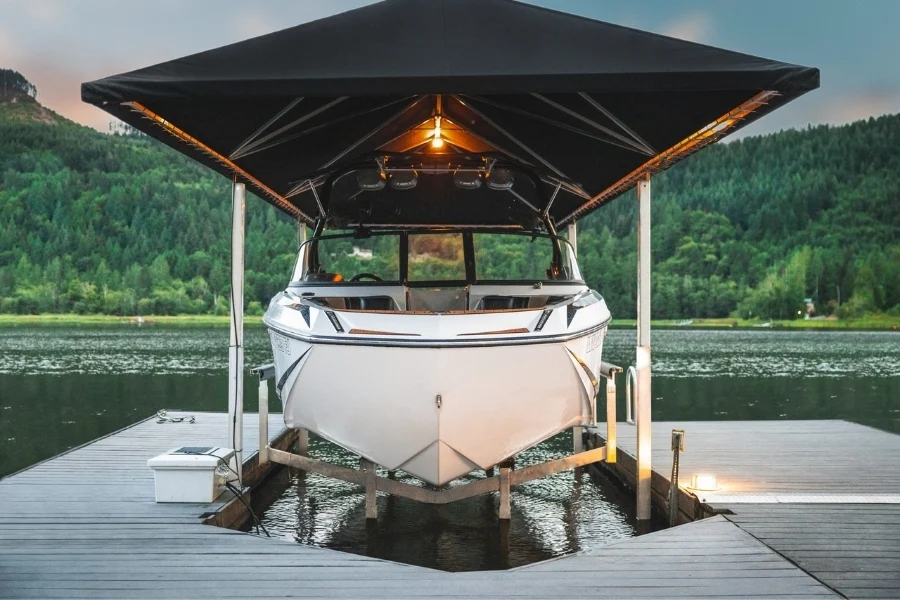
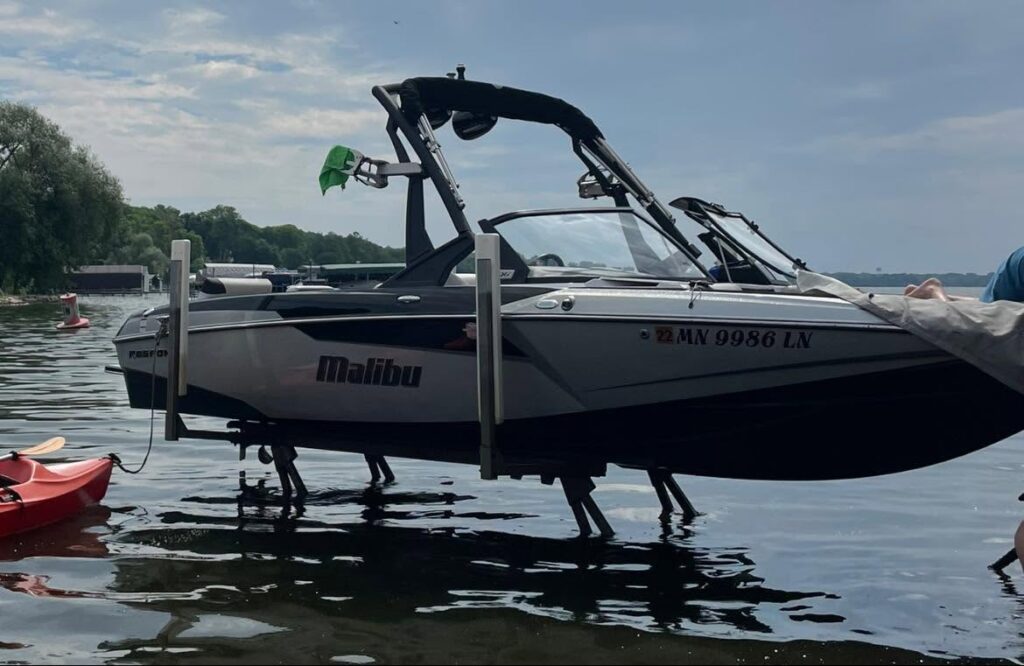
A boat lift is one of the easiest purchases to get ALMOST right.
- Almost right means the boat sits on it, but something is off:
- The lift works harder than it should.
- The boat hangs over the rack further than it should.
- The water is shallower at the lift than anyone checked.
- The canopy got picked as an afterthought and fits like one.
The fix for all of it is the same: show up to the lift conversation with the right details in hand.
- This guide covers exactly what to gather.
Why lift fit gets planned, not picked
A lift has one job: hold your specific boat, in your specific water, without strain.
- Your boat’s weight, length, beam, and hull style all change what fits.
- Your water depth and lake bottom change what the lift can stand on and how it needs to be supported.
- Get either half wrong and the lift can technically work while slowly creating the problems you bought it to avoid.
Lake equipment is too expensive for careless guessing. The fit conversation is where that guessing gets removed.
Start with your boat
1) Determine your boat’s make, model, and year.
- The consultation moves faster when the exact boat is known, not “a pontoon, maybe 22 feet.”
2) Determine length, beam, and dry weight.
- These are in your owner’s manual or on the manufacturer’s site.
- Write them down. Guessed numbers are how lifts end up almost right.
3) Determine what rides on the boat all season.
- Fuel, gear, coolers, water toys, and accessories all add real weight beyond the brochure number.
- You do not need to do the math yourself. Just know what the boat carries, and bring that to the consultation.
4) Determine your boat plans.
- Thinking about upgrading in the next few years? Say so.
- A lift conversation that knows about the next boat can save you from buying twice.
Next, check the water where the lift will sit
Walk out to where the lift would go and check the depth.
- Note the depth at the spot itself, not just at the end of the dock.
- Depth can change through the season, so one August reading is a starting point, not the full story.
Pay attention to the bottom.
- Firm sand supports a lift differently than soft muck.
- A soft bottom does not rule out a lift. It changes how the lift needs to be supported so it stays level instead of settling unevenly under load.
- On soft bottoms, a stable base matters as much as the lift itself. See our Lake Mat products for one way that gets handled.
If you are not sure what the bottom is like, that is normal.
- It is also exactly the kind of detail a site visit settles in minutes.
Then think through placement and the dock
A lift does not sit in the water alone. It has to work with everything around it.
- Where does the lift sit relative to the dock?
- Boarding from the dock should be easy, not a balance test.
- How does the boat approach in wind?
- Think about your prevailing wind, not just a calm morning. Docking into a lift on a windy afternoon is the real test of placement.
- Do you want a canopy?
- Decide during the lift conversation, not after. A canopy measured and set up with the lift fits better than one bolted on later as an accessory.
- What else shares that water?
- Swim areas, neighboring docks, and other watercraft all shape where the lift can reasonably go.
Want to see the docks and lifts we typically install?
Lastly, plan for the Minnesota seasons
In Minnesota, a lift comes out in fall and goes back in come spring. Every year.
- Some lifts break down and move easier than others.
- Heavy lifts handled carelessly get bent frames, scratched finishes, and stressed components. That is how a good lift ages badly.
- So ask: who is handling this lift twice a year, and how?
- If the answer is you and a brother-in-law, be honest about the weight involved.
- If you plan to hire out seasonal setup and removal, that opens up options a DIY owner might avoid. Our transport and storage page covers how careful handling works.
Mistakes that show up after the lift is in the water
The lift was sized to the brochure weight alone.
- Once fuel, gear, and a season of stuff are aboard, the lift works harder than anyone planned.
The depth was never checked at the actual lift spot.
- The boat floats fine at the end of the dock and sits in trouble at the lift.
The bottom was assumed firm.
- The lift settles unevenly, the boat sits crooked, and every raise and lower fights the lean.
The canopy came last.
- Measured with the lift, a canopy fits. Added later and eyeballed, it flaps, rubs, and wears.
The next boat was never mentioned.
- Two summers later there is a bigger boat and a lift that no longer fits it.
Planning a lift in Southern Minnesota
Around Prior Lake, Spring Lake, Cedar Lake, and the South Metro, conditions change property to property, sometimes within the same bay. Depth, bottom, and exposure to wind can all differ from the neighbor three doors down, which is why their lift setup is not automatically your answer.
One more thing worth building into your plan: rules can apply to lifts and docks depending on where and how they are placed, and requirements can change.
- Before you finalize anything, review our Minnesota DNR guidance outline and any local requirements for your lake.
When to bring in BigWave
If you have gathered these details, you are already ahead of most lift buyers.
The consultation is where those details turn into a recommendation. BigWave looks at the boat, the water depth, the bottom, and how the lift will be used, then recommends a setup that fits the property instead of a generic package.
The sizing call gets made with real numbers and a real look at the site, because a lift that is almost right is still wrong.
You can explore new boat lift sales, design & installation to see how the process works.
FAQs
What should I have ready before a boat lift consultation?
Your boat’s make, model, length, beam, and dry weight, a sense of what gear rides on it all season, the water depth where the lift would sit, and what you know about the lake bottom. Rough answers are fine. The consultation fills in the rest.
Does a pontoon need a different lift than a fishing boat?
Different hulls, weights, and widths change what fits, so yes, the boat type matters. That is exactly why the consultation starts with your specific boat instead of a generic size chart.
What if my lake bottom is soft?
Soft bottoms are common on Southern Minnesota lakes and they are workable. The lift just needs the right support underneath so it stays level under load. That is a site-visit question, and it is one worth answering before the lift is chosen.
Should I size the lift for my current boat or the one I might buy?
Bring the upgrade plans to the consultation. Whether it makes sense to plan around a future boat depends on the boat, the timing, and the site, and that call is easier to make with everything on the table.
Related resources
For the bigger picture on planning both a dock and a lift, head back to New Dock & Boat Lift Planning.
Ready to talk through your boat and your shoreline? Explore new boat lift sales, design & installation and request a site visit.